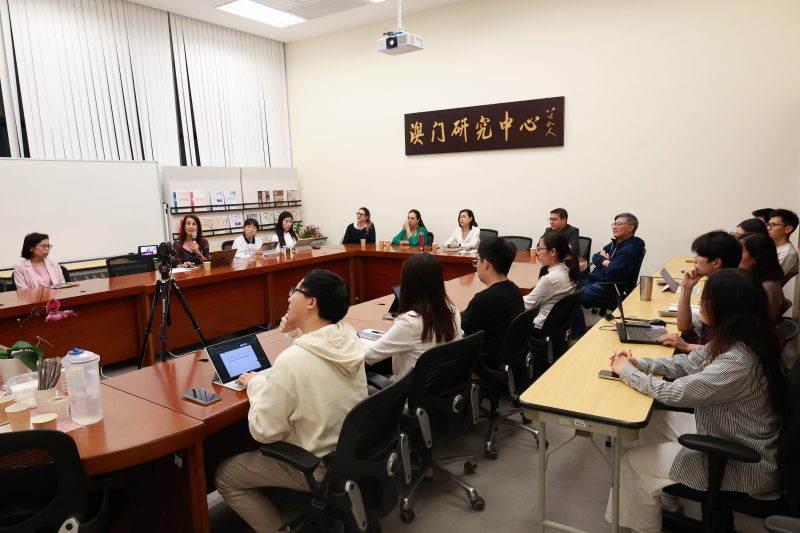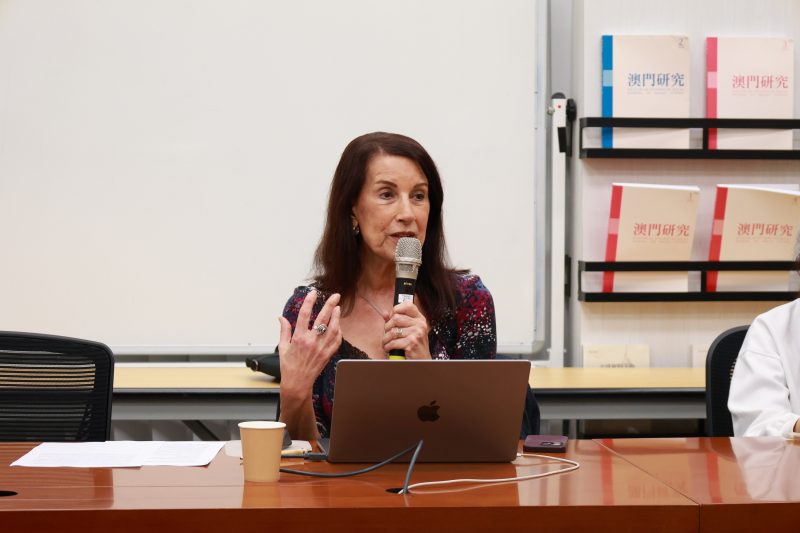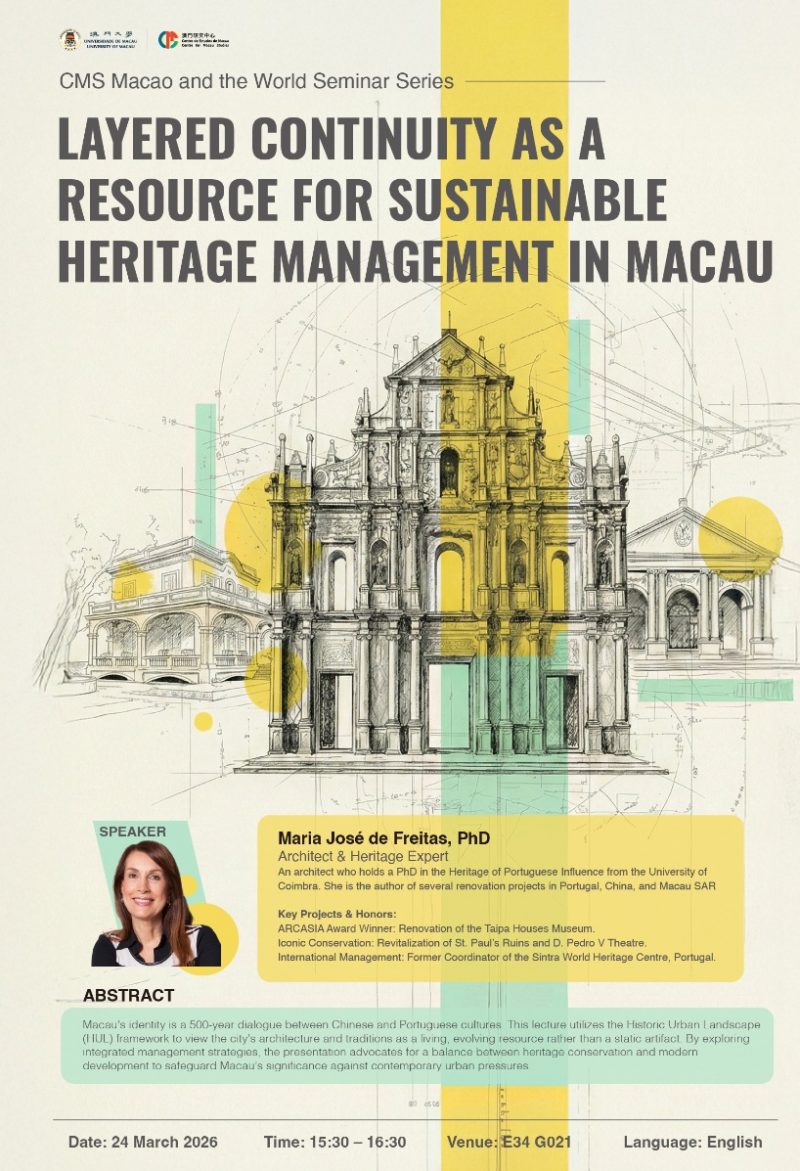
The Centre for Macau Studies (CMS) of the University of Macau (UM) successfully held its CMS Seminar Series on 24 March at the Cultural Building, featuring a lecture by Dr. Maria José de Freitas, architect and heritage specialist, entitled “Layered Continuity as a Resource for Sustainable Heritage Management in Macau.” The seminar examined the historical formation of Macau’s Historic Urban Landscape and its relevance to contemporary sustainable heritage management.
During the lecture, Dr. Freitas highlighted that Macau’s urban identity has evolved through more than five centuries of sustained cultural interaction. The resulting Historic Urban Landscape, shaped by layered cultural, social, and spatial processes, embodies accumulated knowledge, social capital, and both tangible and intangible values embedded within the urban fabric, making it a critical resource for sustainable heritage management.
She further explained that since the sixteenth century, the interaction between Chinese traditions and global influences introduced by the Portuguese has generated a distinctive cultural landscape. Architecture, urban morphology, religious practices, and everyday life coexist as interconnected layers, reflecting resilience and adaptability, and reinforcing the view of heritage as a living, evolving system rather than a static condition.
Dr. Freitas also discussed the UNESCO-endorsed Historic Urban Landscape (HUL) framework, illustrating how it integrates conservation, development, and governance as a driver of sustainability. She emphasized that recent evaluations of Macau’s Historic Centre point to the need for long-term, integrated management approaches that recognize historical layering, support community engagement, and respond to contemporary urban pressures while safeguarding cultural significance. The event concluded with a lively and in-depth discussion.